
1. The Refrigerant Phase-Out Takes Effect — R-410A Out, A2L Refrigerants In
On January 1, 2025, the U.S. regulatory environment shifted dramatically for HVAC systems. Under the framework of the Environmental Protection Agency (EPA) and the American Innovation and Manufacturing Act (AIM Act), manufacturing of HVAC equipment using high-Global Warming Potential (GWP) refrigerants — notably R-410A — was phased out. New systems now must use lower-GWP refrigerants such as R-454B or R-32. ACIQ+2Riteway AC+2
This shift aims to reduce the environmental footprint of HVAC systems, but it also introduced challenges: supply shortages for A2L-rated refrigerants, increased equipment prices due to added safety and compliance requirements, and a steep learning curve for contractors that must become certified in new refrigerant handling protocols. HVAC Informed+2ACHR News+2
Other key impacts: older systems using R-410A remain serviceable, but long-term maintenance is likely to grow more expensive, and new installs in 2025 and beyond will bear the burden of compliance. Superior CO-OP HVAC+1

2. The Rise of Heat Pumps and Electrified HVAC — “Electric is the Future”
One of the major themes of 2025 was accelerated adoption of heat pump technology. Heat pumps — especially advanced systems capable of operating efficiently even in cold climates — made big gains in both residential and commercial sectors. HVAC Informed+2Building Decarbonization Coalition+2
The drive toward electrification reflects broader decarbonization goals. For many building owners and facility managers, switching from fossil-fuel-based furnaces or boilers to all-electric heat pump solutions meant long-term energy savings, reduced carbon footprint, and compliance with emerging efficiency and environmental standards. Building Decarbonization Coalition+2Merlin Monitor+2
As climate policy and incentives from governments push toward cleaner energy, heat pumps are increasingly seen not as a niche alternative, but as the default for new HVAC installs or major retrofits. ACHR News+1
3. The 2025 AHR Expo: Industry’s Big Showcase for Change
In February 2025, the AHR Expo (held in Orlando) served as a major inflection point — showing where the HVACR market is headed. Attendance was strong (50,807 participants), and hundreds of exhibitors displayed the latest in equipment, controls, refrigerants, and smart automation. ACHR News+2Avnan+2
Key themes at the show included: transition to A2L refrigerants, proliferation of smart/IoT-enabled HVAC equipment, rising demand for high-efficiency systems, and increased emphasis on sustainability and decarbonization. ACHR News+2HVAC Informed+2
For many contractors and building owners, AHR Expo 2025 underscored that changes already underway — in regulation, product design, and market demand — are not temporary: they represent a new baseline for the entire industry. Avnan+1

4. Efficiency Standards Tighten — New DOE/EPA Rules on SEER, HSPF and More
In 2025, minimum efficiency requirements for HVAC equipment got more demanding. Compliance with upgraded standards for cooling (SEER/SEER2), heating (HSPF2), and overall fuel utilization (AFUE) became more widespread, pushing manufacturers to produce more efficient and greener systems. Northstar HVAC/R+2Mar-Hy Distributors+2
For building owners with older HVAC systems, this raised the cost-benefit bar for replacement vs. maintenance. For new installations, it meant choosing systems designed for long-term energy savings — and possibly qualifying for incentives or rebates tied to efficiency and environmental performance. Northstar HVAC/R+1
5. Smart & AI-Driven HVAC Control Gains Traction
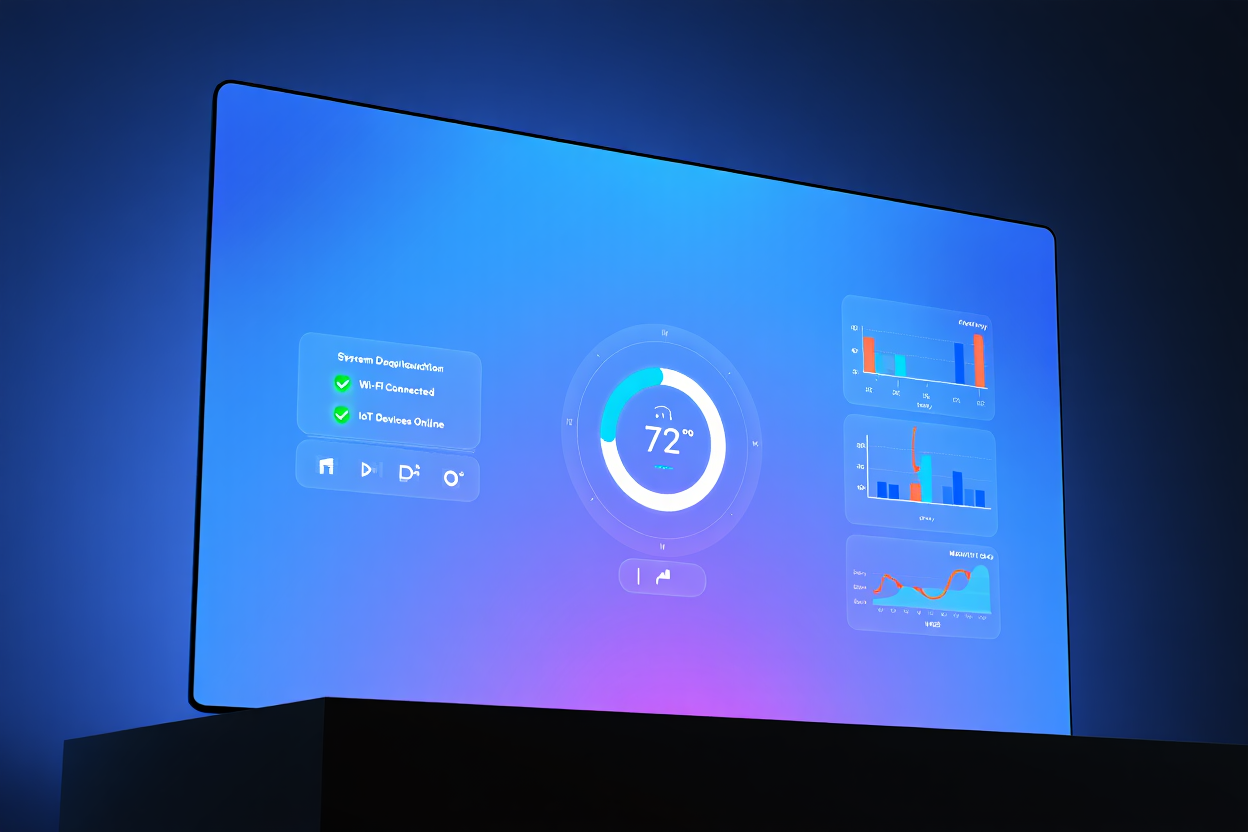
2025 saw increased interest in integrating AI, IoT, and data-driven controls into HVAC systems. One recent academic study, for example, proposed a “Human-in-the-Loop” (HITL) framework that adapts HVAC operation based on real-time user feedback and changing electricity market prices — improving comfort while reducing energy costs. arXiv+1
Meanwhile, other studies focused on advanced ventilation and air-quality control: a data-driven operator learning model showed how machine-learning + ventilation controls can optimize airflow and maintain indoor air quality while minimizing energy use. arXiv
The result: HVAC is no longer “set it and forget it.” Smart, responsive controls are becoming a core part of system design — especially for larger or multi-zone buildings. HVAC Informed+1
6. Widespread Adoption of VRF & Hybrid VRF Systems in Commercial Settings
Variable Refrigerant Flow (VRF) systems — long favored in niche commercial projects — saw a surge in 2025 adoption. The shift is driven by their flexibility, efficiency, and suitability for buildings needing simultaneous heating and cooling, or varied climate zones (e.g., offices, hotels, schools). Merlin Monitor+2HVAC Informed+2
Hybrid VRF systems (some combining refrigerant with water-based distribution) also gained traction, particularly in retrofit projects replacing legacy chillers or boilers. These hybrid systems offer decarbonization potential while lowering operational expenses. HVAC Informed+1
As more building owners look to reduce emissions and energy costs, VRF — once a “premium” option — is becoming mainstream. ACHR News+1
7. Market Disruptions: Refrigerant Shortages, Pricing Challenges, Supply-Chain Strain
The transition to A2L refrigerants wasn’t smooth. Many contractors and distributors reported supply shortages, difficulty procuring sufficient refrigerant for new installs, and delays in project timelines. ACIQ+2HVAC Informed+2
The result: some homeowners and building managers postponed HVAC upgrades or chose to stick with older R-410A systems (while still possible), creating a temporary “two-speed” market. Others opted for alternative solutions — like heat pumps, VRF, or heat-pump water heaters — that avoid refrigerant supply constraints altogether. Harvest Thermal+2Merlin Monitor+2
8. Increased Demand for Training & Workforce — Technicians Need New Skills Fast
With the new refrigerants, heat-pump systems, VRF technology, and smart/AI-driven controls, the skill set required of HVAC professionals expanded rapidly in 2025. Contractors must now be certified in handling A2L refrigerants, familiar with modern heat-pump installation and maintenance procedures, and capable of commissioning smart control systems. HVAC Informed+2Mar-Hy Distributors+2
This has exacerbated an existing labor shortage in HVAC, but also opened opportunities for training, specialization, and higher-value services. For many smaller HVAC firms, the transition represents a strategic inflection point — adapt or risk being left behind. Mar-Hy Distributors+1
9. Air-to-Water Heat Pumps & Thermal Storage Gain Ground — Toward Electrified HVAC for Heating Season
This year brought broader adoption of air-to-water heat pump (AWHP) systems, especially in colder climates or where building plumbing is compatible. AWHPs offer a flexible, all-electric alternative to boilers, often with better efficiency and easier integration in retrofit and new-build projects. Harvest Thermal+1
In many cases, AWHPs were being specified alongside thermal storage solutions — for example, using heat-pump water heaters (HPWHs) controlled with predictive algorithms to store hot water or heat during low energy-cost periods. Early field studies showed promising energy savings using model-predictive control (MPC) for HPWHs. arXiv+1
For building owners and developers focused on decarbonization and resilience, AWHP + thermal storage began to look like a “future-proof” heating and hot-water solution in 2025.
10. Smart HVAC Controls & Zoning Surge — Targeted Comfort, Lower Energy Use
Multi-zone HVAC control got a real boost in 2025. With rising energy costs, upgraded refrigerant mandates, and more homes/buildings requiring flexible comfort control, zoning systems gained traction — especially those that are easy to install, compatible with existing equipment, and can integrate with smart thermostats. ZoningSupply.com - Zone Control+2Ecology Jay+2
On that front, Ecojay’s release of SmartZone-4X 3.0 and SmartZone-3X 3.0 marked a notable milestone. The new 2025 controllers offer universal compatibility (gas, electric, heat pump, dual fuel, etc.), support for up to 20 zones (expandable), built-in fresh-air and economizer controls, de-humidification/de-humid modes, and configurable multi-stage control — all in a controller that installs far more simply than many legacy zone boards. Ecojay Products

The “3.0” update includes an improved bright color display, LED diagnostics on every terminal, fresh-air intake and humidity/economizer options — making zoning more accessible and practical for retrofits and new builds alike. EcoJay Products
For many homeowners and smaller commercial buildings that struggled with temperature imbalance, variable occupancy, or ductless HVAC discomfort — zoning with modern controllers became a go-to solution in 2025. As one distributor summary put it: for many applications, SmartZone 4X (or 3X) is the “clear winner” for universal compatibility, ease of install, and long-term reliability. ZoningSupply.com - Zone Control
11. Adoption of Smart Zoning & Dampers — Precision Airflow Control Comes of Age
Beyond just zone controllers, 2025 also saw growing interest in integrating smart dampers and automated airflow controls in HVAC systems. This allows for even finer-grained control: each zone’s airflow can be adjusted not just by thermostats, but by damper status, supply-air sensors, and system logic responding to occupancy, air quality, or humidity. EcoJay SmartZone Spec
When combined with Ecojay’s SmartZone 3.0 / 4X 3.0 platforms, these systems can offer multi-zone control, fresh air ventilation, economy modes, staged heating/cooling, and dehumidification — all with a relatively simple, retrofit-friendly install.
This trend — toward airflow optimization rather than “one-size-fits-all” heating/cooling — reflects a broader shift in HVAC: from brute-force temperature control to intelligent, adaptive comfort systems.
12. Smart / AI-Powered Building HVAC Controls — From Theory to Real Deployments
Several research efforts published in 2025 pushed HVAC control past fixed schedules and static algorithms: machine-learning, occupancy detection, predictive control, and feedback-driven comfort management moved from labs into real-world simulation and field-test phases. arXiv+2arXiv+2
For example, one “Human-in-the-Loop” (HITL) model dynamically adapts HVAC operation based on user feedback and changing electricity prices, improving comfort while reducing energy consumption. arXiv
Another framework used neural-operator learning to optimize ventilation airflow and vent angles, offering substantial energy savings while maintaining indoor air quality. arXiv
As smart building technology becomes more common, these approaches could reshape how HVAC systems are designed, installed, and operated — especially in larger residential complexes, offices, or other multi-occupancy buildings.
13. Security & Privacy Research — HVAC Systems as Attack Surfaces
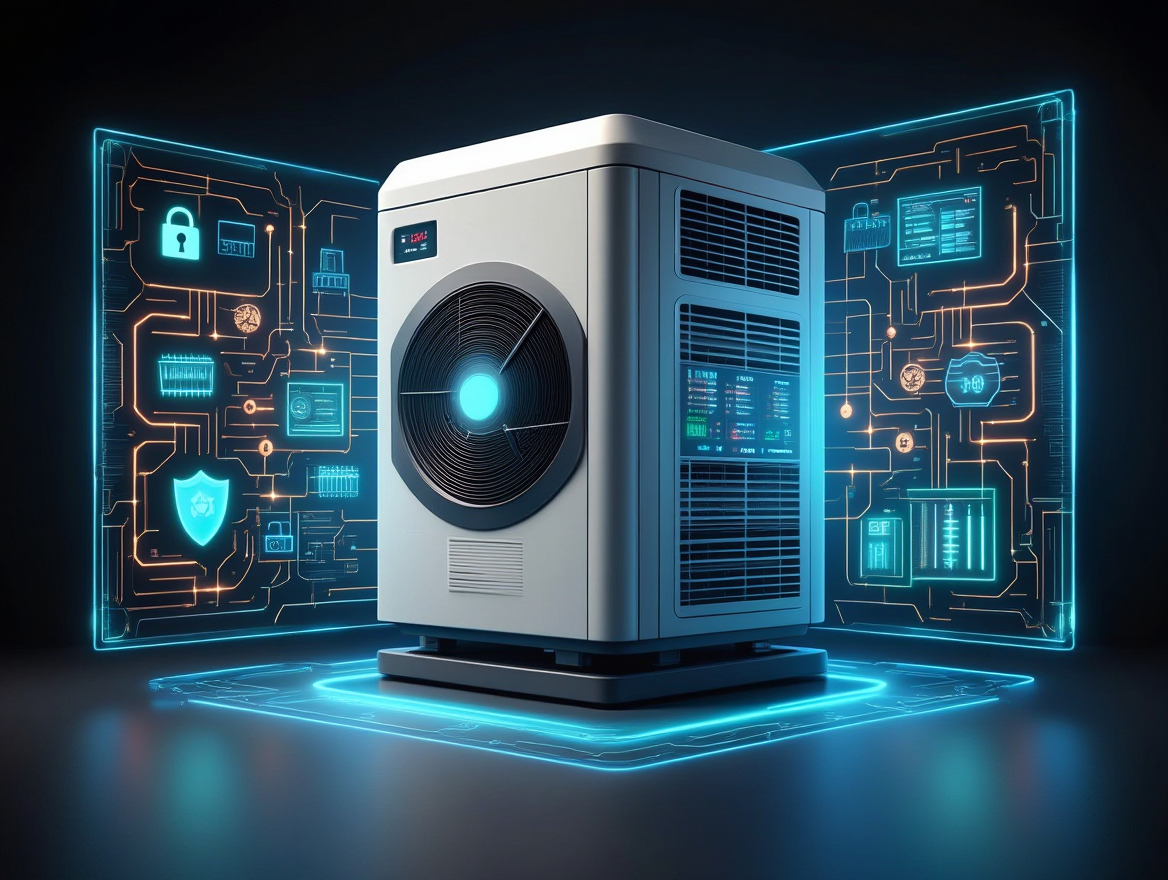
2025 wasn’t all about efficiency and comfort — researchers also flagged emerging risks tied to the increasing complexity and connectivity of HVAC systems. One academic paper introduced a framework for detecting cyber-physical attacks on HVAC components (sensors, actuators, networked controllers), using machine-learning to catch anomalies while preserving privacy. arXiv
Even more startling: another study demonstrated that common HVAC pressure sensors can be used to reconstruct intelligible human speech — meaning that HVAC systems might inadvertently become privacy or eavesdropping vulnerabilities. arXiv+1
These findings introduced a new set of concerns for building owners and managers: as HVAC becomes smarter and more connected, security and privacy need to become part of the spec.
14. Thermal Storage + Heat-Pump Water Heaters — A New Combo for Efficient Heating & Hot Water
Leveraging smart control and predictive algorithms, heat-pump water heaters (HPWH) paired with thermal storage — once thought of as a premium add-on — began to emerge as a viable, practical solution for many homes and multifamily buildings. A recent field study showed that a 120 V HPWH managed by a model-predictive control (MPC) system could pre-heat water ahead of demand, reduce energy costs by ~23–28%, and slash energy waste compared to traditional systems. arXiv
For developers and retrofit specialists, the appeal is clear: combined with A2L-compliant heat pumps or all-electric HVAC systems, thermal storage + HPWH offers low-carbon, efficient heating and hot-water — and reduced dependence on gas or fossil fuel systems going forward.
15. Retrofits & Upgrades Surge — Aging Systems, New Standards, and High Demand
Faced with new refrigerant regulations, rising energy costs, and pressure to decarbonize, many homeowners and building owners opted in 2025 to upgrade or retrofit older HVAC systems rather than continue band-aid repairs. This included replacing older R-410A systems, installing all-electric heat pumps, adding zoning boards and dampers, or integrating smart controls for better efficiency.
Contractors and distributors reported a spike in remodel and retrofit requests — especially from clients seeking to bring older systems into compliance or improve comfort in older homes and small commercial buildings. ACHR News+2HVAC Informed+2
These trends signal that 2025 — more than a regulatory transition year — may be a peak moment for modernizing America’s HVAC stock.
16. Renewable & Geothermal HVAC Solutions Gain More Attention
As decarbonization momentum grew, the industry saw renewed interest in geothermal heating/cooling, solar-assisted HVAC, and other renewable-energy–integrated solutions. Contractors and stakeholders began to position these technologies not just as “green” options, but as viable long-term alternatives, especially where clients wanted to minimize reliance on fossil fuels. PR Newswire+2Northstar HVAC/R+2
In some jurisdictions, this trend dovetailed with incentives and regulatory pressure — a combination likely to accelerate adoption in the next few years.
17. Awareness of Indoor Air Quality (IAQ) & Fresh-Air Ventilation — Zoning Controllers Adapt
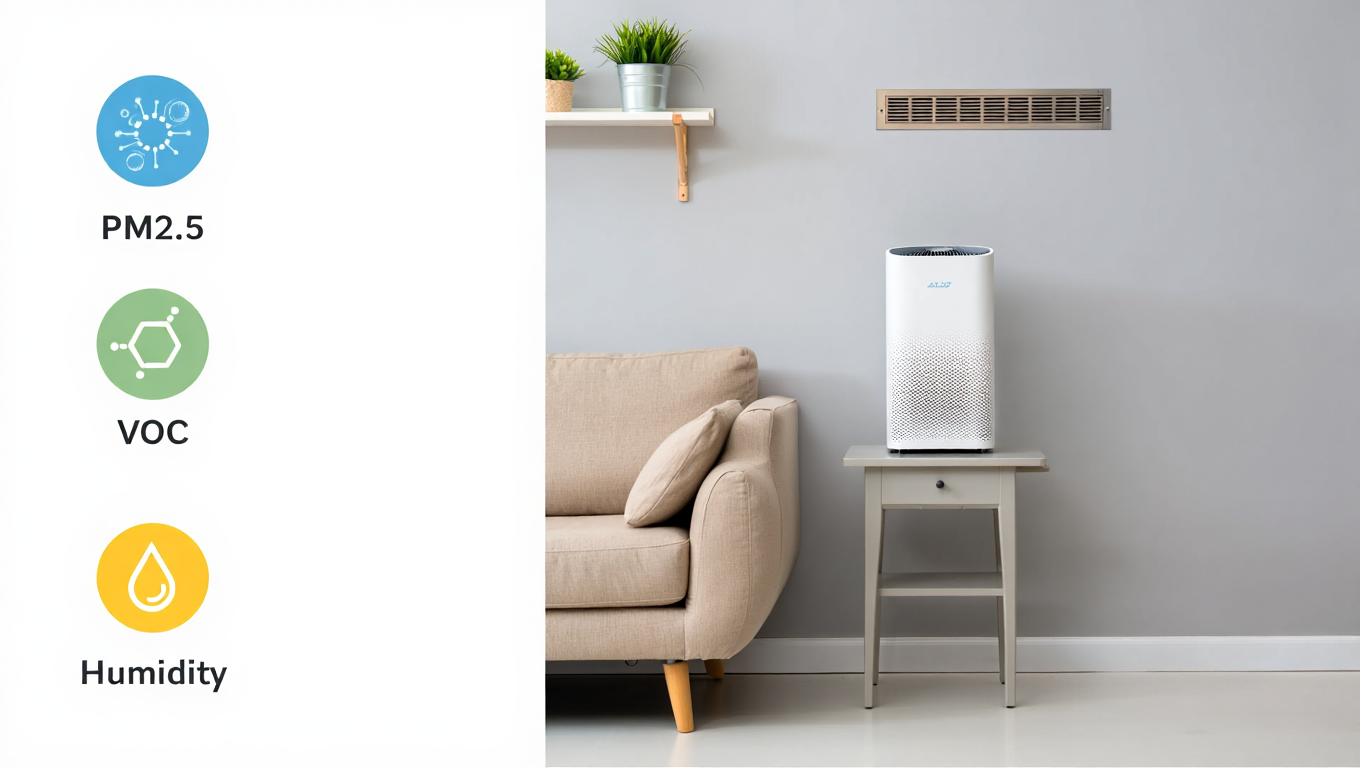
With increased focus on occupant health and building resilience post-pandemic, IAQ became more than just a “nice-to-have” topic. In 2025, many new HVAC products and controls emphasized built-in fresh-air intake, economizer modes, humidity control, and ventilation compliance with standards such as ASHRAE 62.2. EcoJay SmartZone SPEC
Zone control panels like Ecojay’s new SmartZone 3.0 / 4X 3.0 integrate fresh-air and economizer capabilities — making IAQ-focused ventilation part of the standard zoning package. Ecojay+2
For schools, multifamily residential, and commercial buildings, this shift underscored that HVAC isn’t just about comfort — it’s increasingly seen as a core element of occupant health, safety, and resilience.
18. Demand Surge & Backlogs — HVAC Supply Chain Under Pressure
Between refrigerant shortages, increased demand for heat pumps, and widespread retrofits, many HVAC contractors and distributors in 2025 found themselves with long lead times, backlogged installs, and stretched supply chains. Several reports pointed to delays in components, refrigerant cylinder shortages, and pressure on inventory of compliant equipment. ACIQ+2HVAC Informed+2
This environment drove up installation costs and wait times for homeowners — but also created opportunity for well-prepared contractors who secured materials early, invested in training, and offered bundled retrofit/zoning/upgrade services.
19. Growing Momentum for Building Electrification & Decarbonization — Regulatory & Market Forces Align
2025 felt like a turning point for building electrification. Regulatory pressure, incentives, public concern about emissions, and rising gas prices pushed more property owners to consider electrified HVAC, heat-pump water heaters, geothermal, solar-assist, and other low-carbon solutions. PR Newswire+2Merlin Monitor+2
As a result, HVAC design conversations began to shift. Rather than specifying “gas furnace plus A/C,” many architects, MEP engineers, and contractors started designing buildings from the ground up for electric heat — often with zoning, smart control, and renewable integration in mind.
20. Zoning & Damper-Based HVAC Control Comes Into Its Own — SmartZone 3.0 Leading the Way
One of the most notable developments in 2025 was the renewed focus on zoning and airflow control — especially for residential and light-commercial buildings. At the center of this movement was Ecojay’s release of SmartZone 3.0 (both 3-zone and 4-zone / multi-zone versions). Their new controllers — the SmartZone-3X 3.0 and SmartZone-4X 3.0 — combine universal compatibility (gas, electric, heat pump, etc.), support for up to 20 zones (expandable), built-in fresh-air and economizer controls, dehumidification modes, multi-stage staging controls, and a modern LED/status interface. EcoJay
For many homeowners, this meant zoning was no longer a niche luxury — it became an affordable, retrofit-friendly way to improve comfort, reduce energy waste, and manage airflow intelligently. According to distributors, SmartZone 4X 3.0 emerged as the “best overall” option for larger homes or light-commercial setups, while SmartZone 3X 3.0 offered strong value for mid-sized projects. ZoningSupply.com - Zone Control

For contractors, the simplicity of installation — screwless terminals, dip-switch configuration, built-in supply-air sensor, and LED diagnostic feedback — helped reduce install time and complexity, making zoning a more attractive upsell or retrofit option. ecojay.com
Overall, 2025 may have marked the moment when zoning and damper-based control finally became “mainstream” in HVAC — not just for luxury homes, but for ordinary homes and small commercial buildings too.
Looking Back — What 2025 Means for the Future of HVAC
2025 was a watershed year. The combination of environmental regulation (phasing out high-GWP refrigerants), rising energy / carbon awareness, technological advances (heat pumps, smart controls, AI, zoning), and shifting market dynamics (retrofitting, supply strain, demand surge) forced the HVAC industry — contractors, manufacturers, building owners — to adapt quickly.
What stands out is that many of these changes point to a longer-term transformation: from HVAC as a commodity “cooling/heating box,” to HVAC as an integrated, efficient, adaptive, and even healthy system — delivering comfort, air quality, energy efficiency, and environmental responsibility.
The rise of smart zoning (e.g., Ecojay SmartZone 3.0), air-to-water heat pumps, thermal storage, AI-driven controls, and electrified systems suggest that “HVAC 2025” is really “HVAC 2035.”
If you’re a homeowner, building manager, or HVAC professional — 2025 was more than a transition year. It was the start of a new era.